
Know what happened.Know the next move.
A relationship CRM built around the work that protects client trust: prepare for the conversation, capture the commitment and carry it through.
Know the relationship before you reply.
Emerson is the relationship CRM that gives your firm a shared memory. Connected emails, calls, meetings, documents and payments come together around each client, so your team knows what happened, what was promised and what needs to happen next.
- Email, read and written through your own Gmail or Outlook account.
- Texts, sent from your own number rather than a shared one.
- Calls: who rang, when, and what was said.
- Meetings, recorded and summarised, filed against everyone who was on them.
- Documents, including the version they signed and the day they signed it.
- Promises, pulled out of the transcript and dated.
- Payments, next to the promise they settle.
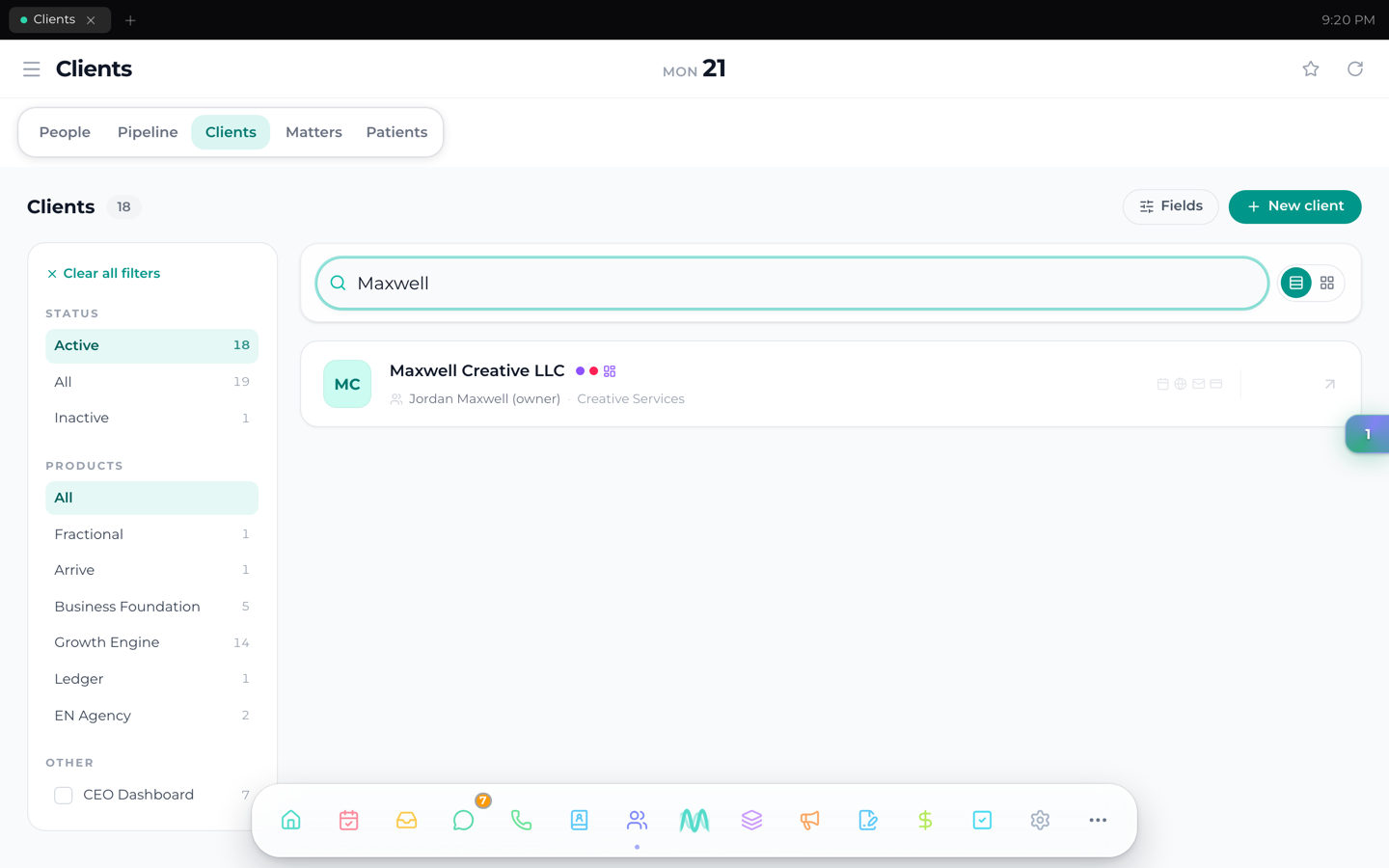
A number you do not recognise rings. They say the two of you spoke in the spring. You type their name before you pick up, and the spring is on the screen: the introduction from a mutual, the call that followed it, the two documents you sent, the number you quoted, and the one thing you said you would come back on.
When the context lives with the relationship, a handoff does not have to start from zero. Walk into the meeting prepared, pick up where a colleague left off, and review the next commitment before it slips.
Keep your inbox. Stop losing the context.
Gmail or Outlook, connected by you through their own consent screens. Emerson reads and writes through your own account rather than replacing it. 10 mailboxes are included, and another is $75 a month.
- You connect it through Google’s and Microsoft’s own consent screens. We never ask for a password.
- Access ends the day you say it does.
- A booking link that writes straight onto your calendar and sends the invitation for you.
- Mail leaves under your own domain, never a shared sender another customer also uses.
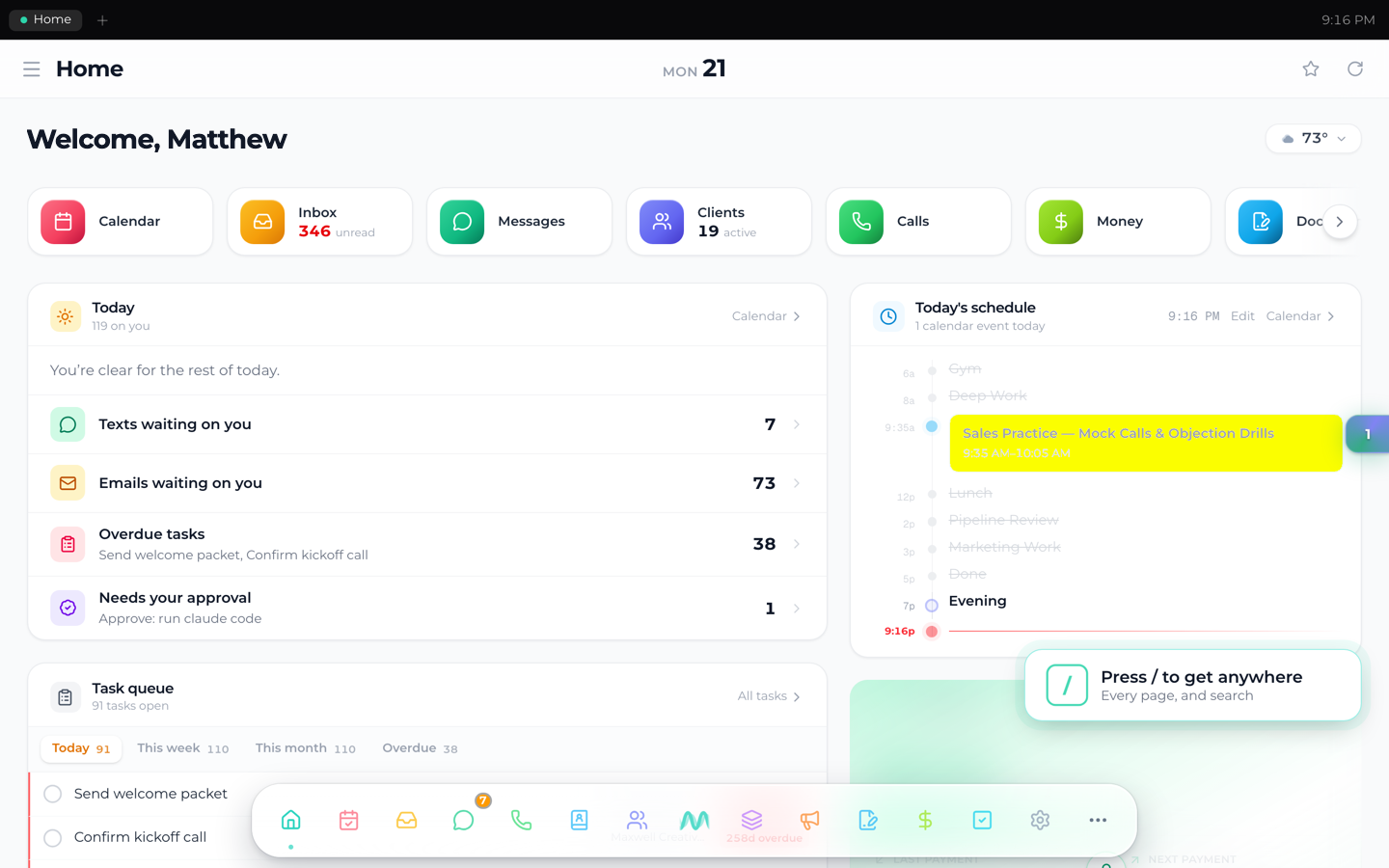
An email arrives from an address nobody in the office recognises. It opens already attached to a person, and under it sits everything that person has ever done with you. You answer from the same screen, and the answer is on the timeline before you have closed the tab.
Make the meeting lead somewhere.
Recorded, transcribed and summarised, then filed against every person who was on the call. The thing you said out loud becomes a dated line instead of a memory.
- Recording is a setting on the room, so the rule is decided once instead of argued per call.
- The transcript is searchable by the person, not by a file name you have to remember.
- Promises are pulled out of what was actually said, dated, and checked every morning.
- The write-up lands on the timeline of everyone who attended, not in a folder somebody owns.
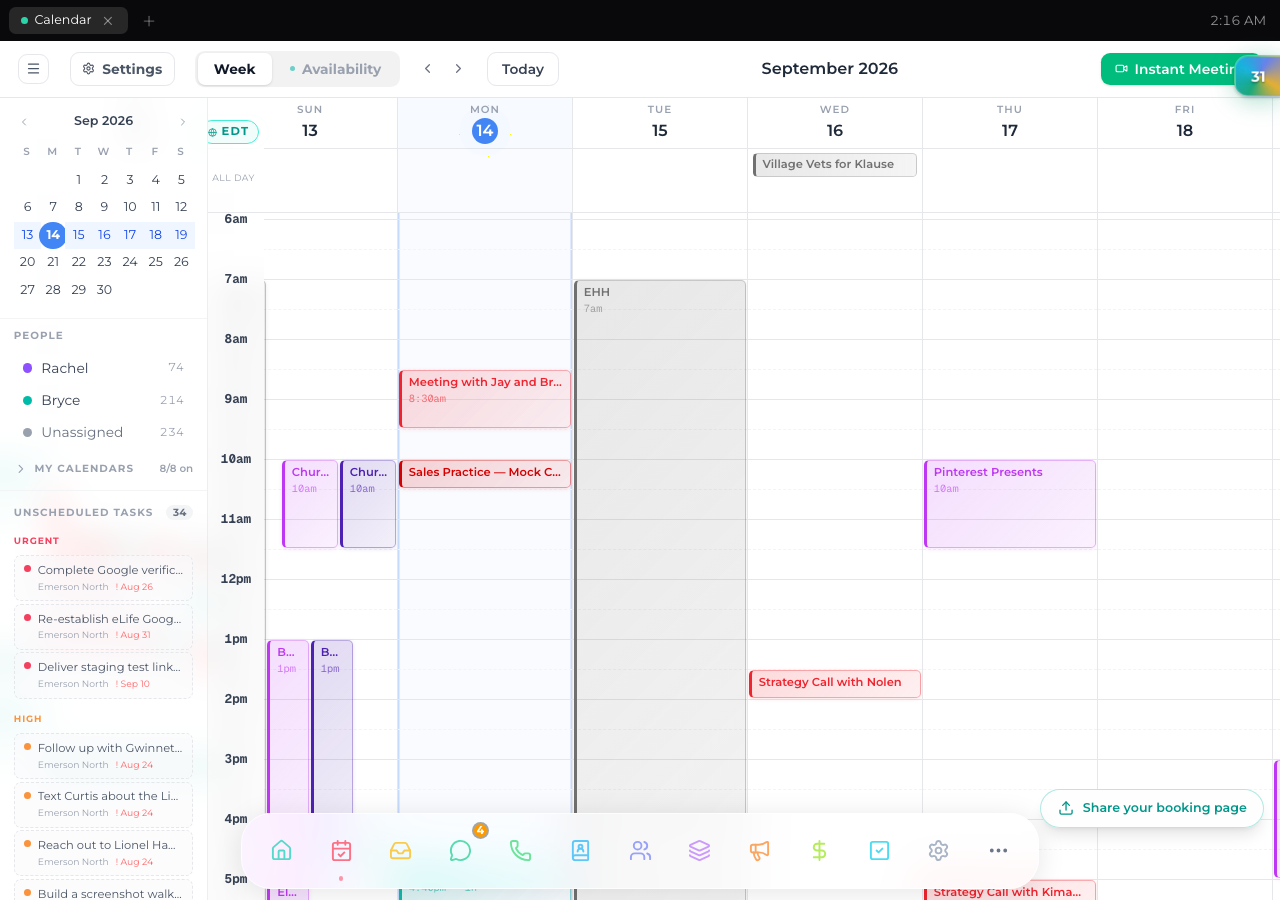
Wednesday’s call runs long and you take no notes at all. By the time you are back at your desk there is a recording, a transcript you can search by person, a summary, and the thing you said you would send on Friday, dated Friday, sitting on the list.
Move from agreement to signature.
Upload the document, place the fields, send it. They sign in a browser with nothing to install, and the signed copy goes where it belongs: against the person, on the day they signed.
- Upload, place the signature and date fields, send. That is the whole flow.
- They sign in a browser. Nothing for the other side to install or sign up for.
- The signed copy files itself against the person instead of living in an inbox.
- It replaces the e-signature line on the teardown, not just the logo on it.
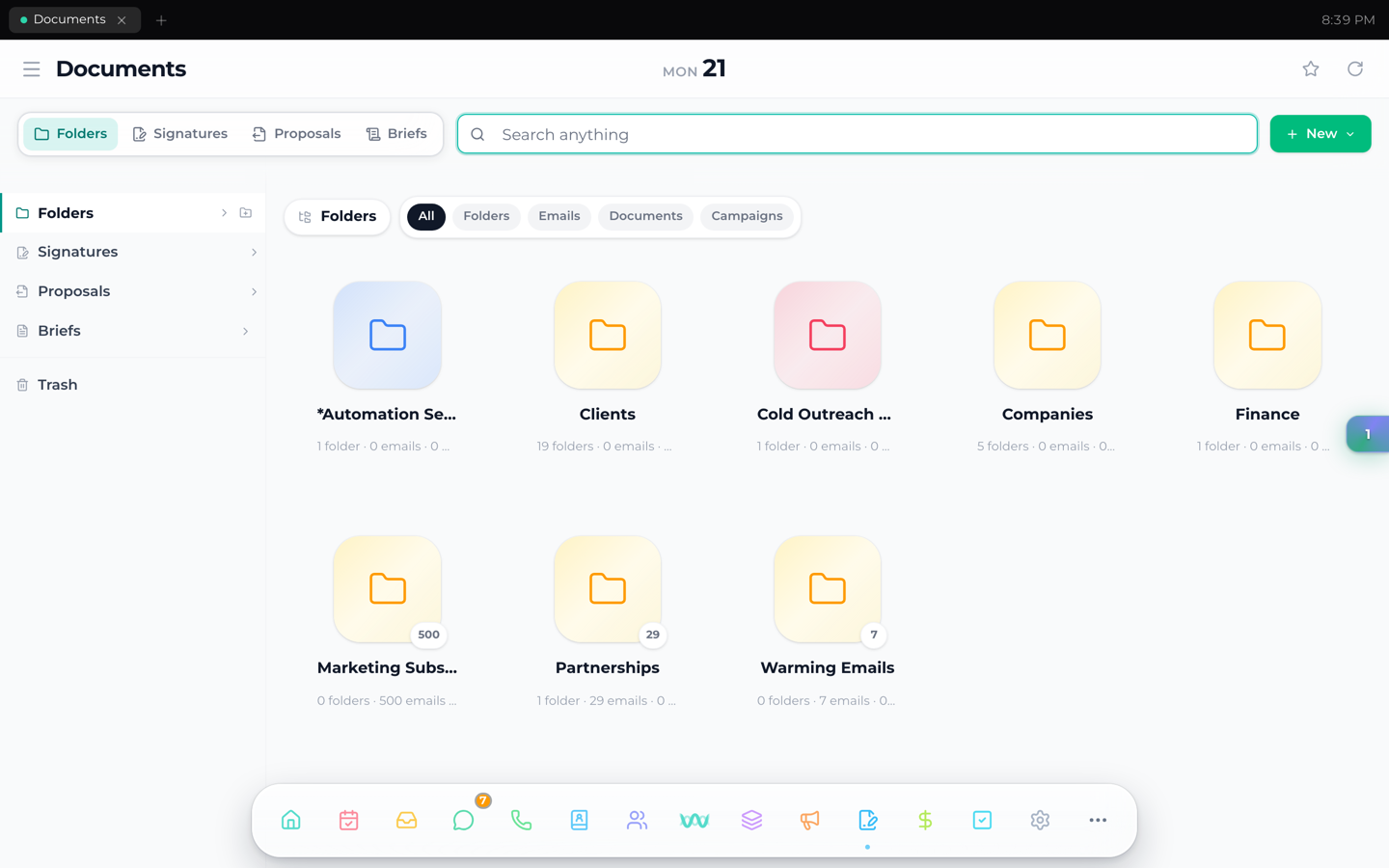
An engagement letter goes out at four. At six it is signed on a phone. The signed copy is on that client’s timeline next to the call where you agreed the fee, and the separate e-signature subscription is off the card.
Bring the payment back to the relationship.
Two different facts, kept as two different numbers. A payment is not a row in an accounting tool you open at month end, it is a line on the timeline of the person who paid it.
- Every payment sits next to the promise it settles, on the timeline of the person who made it.
- What you are owed and what you are holding are never added together.
- “Have they paid?” and “what did we agree?” are answered by the same screen.
- It is not fund accounting, it is not a cap table, and it is not legal advice of any kind.
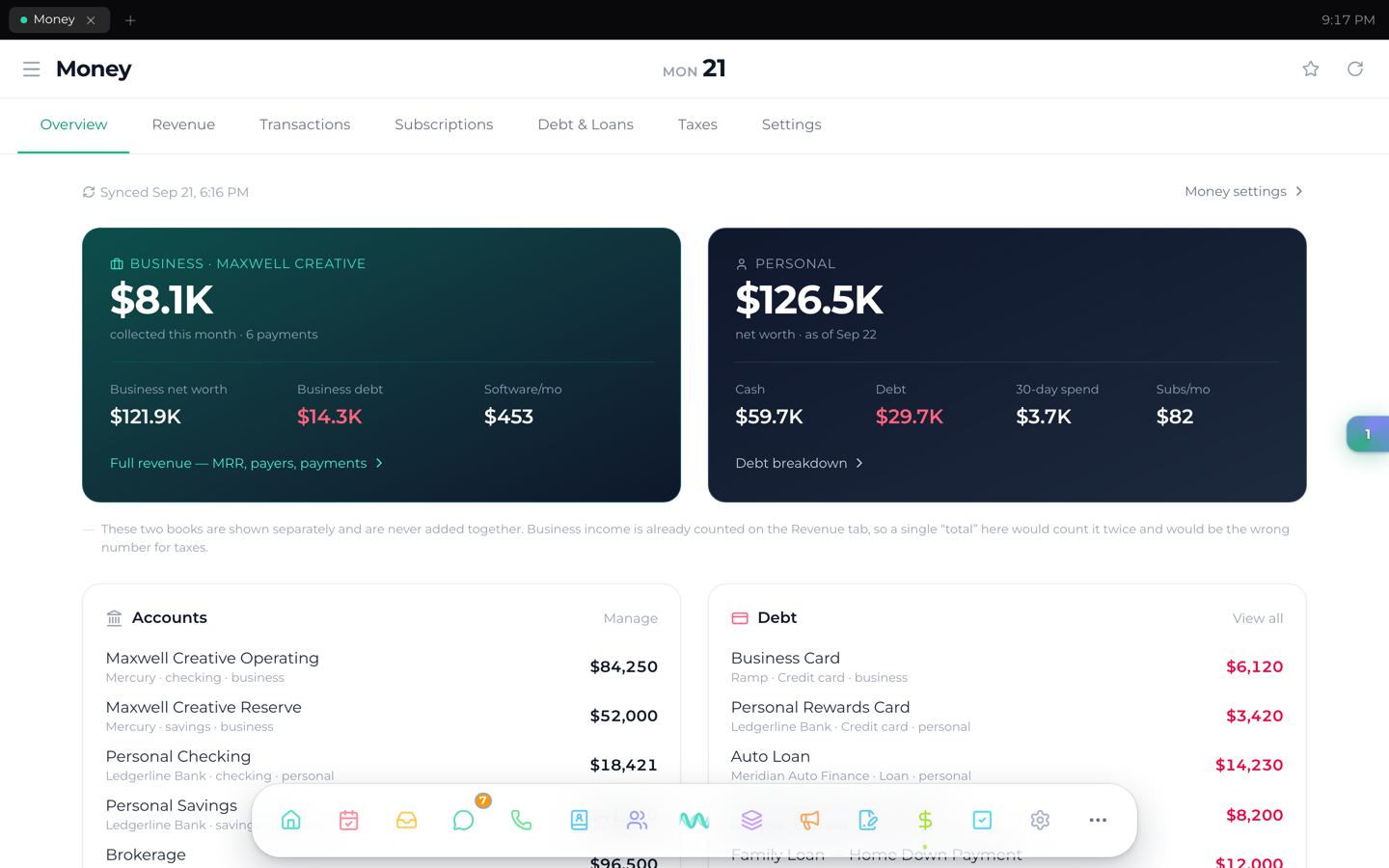
A law firm running on this today keeps client money and firm money apart by law. The dashboard shows what the firm is owed and what the firm is holding side by side, and refuses to add them into one number.
Stay present with the people who matter.
Mail goes out under your own domain, to people who are already on the timeline rather than to a separate list kept in a tool you sign into twice a year. Every reply comes back to the same place.
- Built for the update and the re-raise, not for a newsletter.
- A public offering page that records interest straight into the dashboard.
- The people in a campaign are the people on the timeline. There is no second list to keep in step.
- It goes out under your name. Nothing routes through a shared sender.
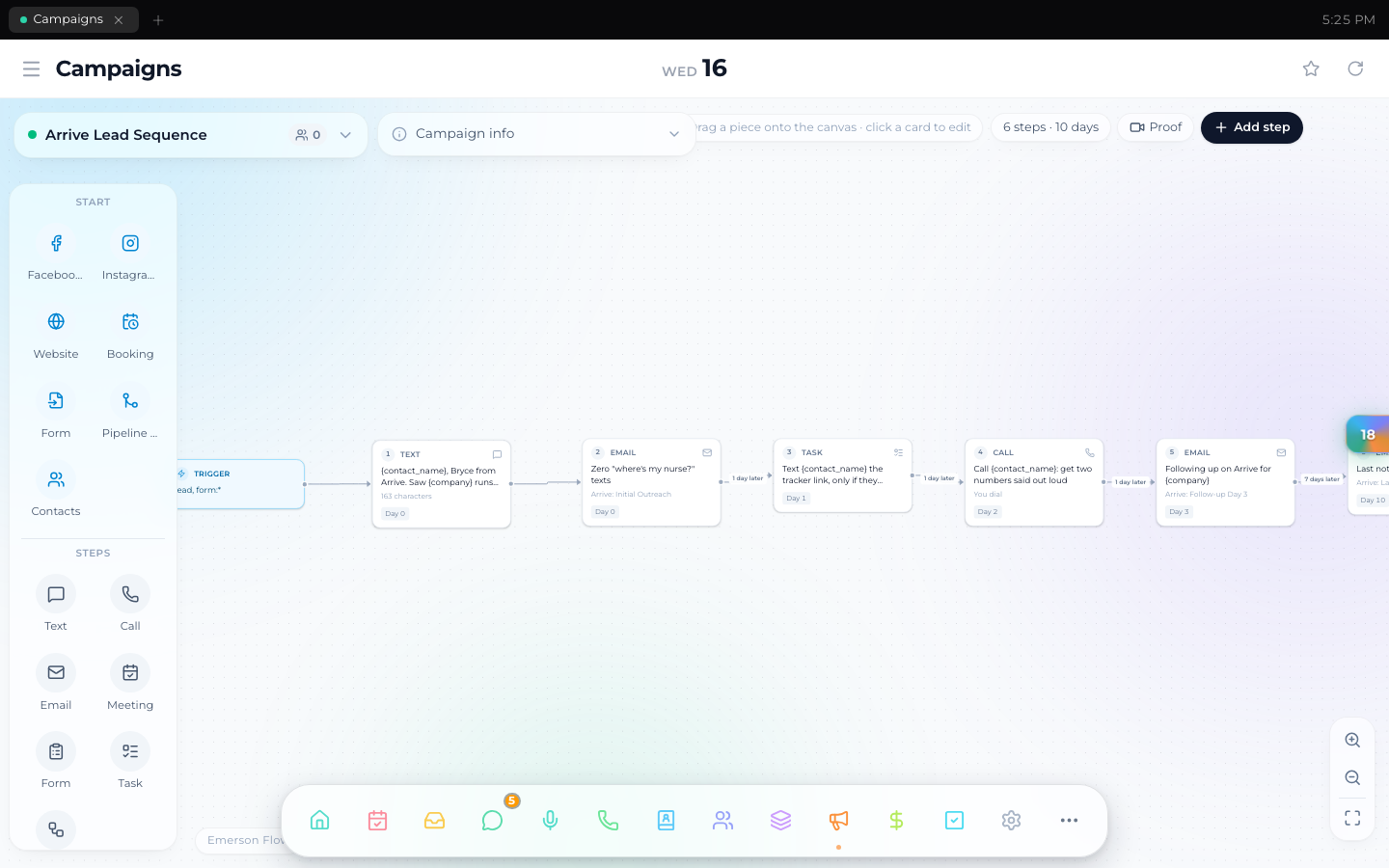
A quarterly investor update goes to the whole list from your own address. Three people write back. Those three replies are on three investor timelines by the time you read them, each one next to the call where that investor first said yes.
Give every commitment a next step.
A task here is not something you remembered to type. It is the sentence you said, dated, with the person you said it to attached to it.
- Kept or broken becomes a fact about the relationship, not a feeling about it.
- A draft or a question arrives as a message in the thread. Typing back a reason is how you say no.
- Only a real permission stops and waits for you.
- The morning check runs whether you open the dashboard or not.
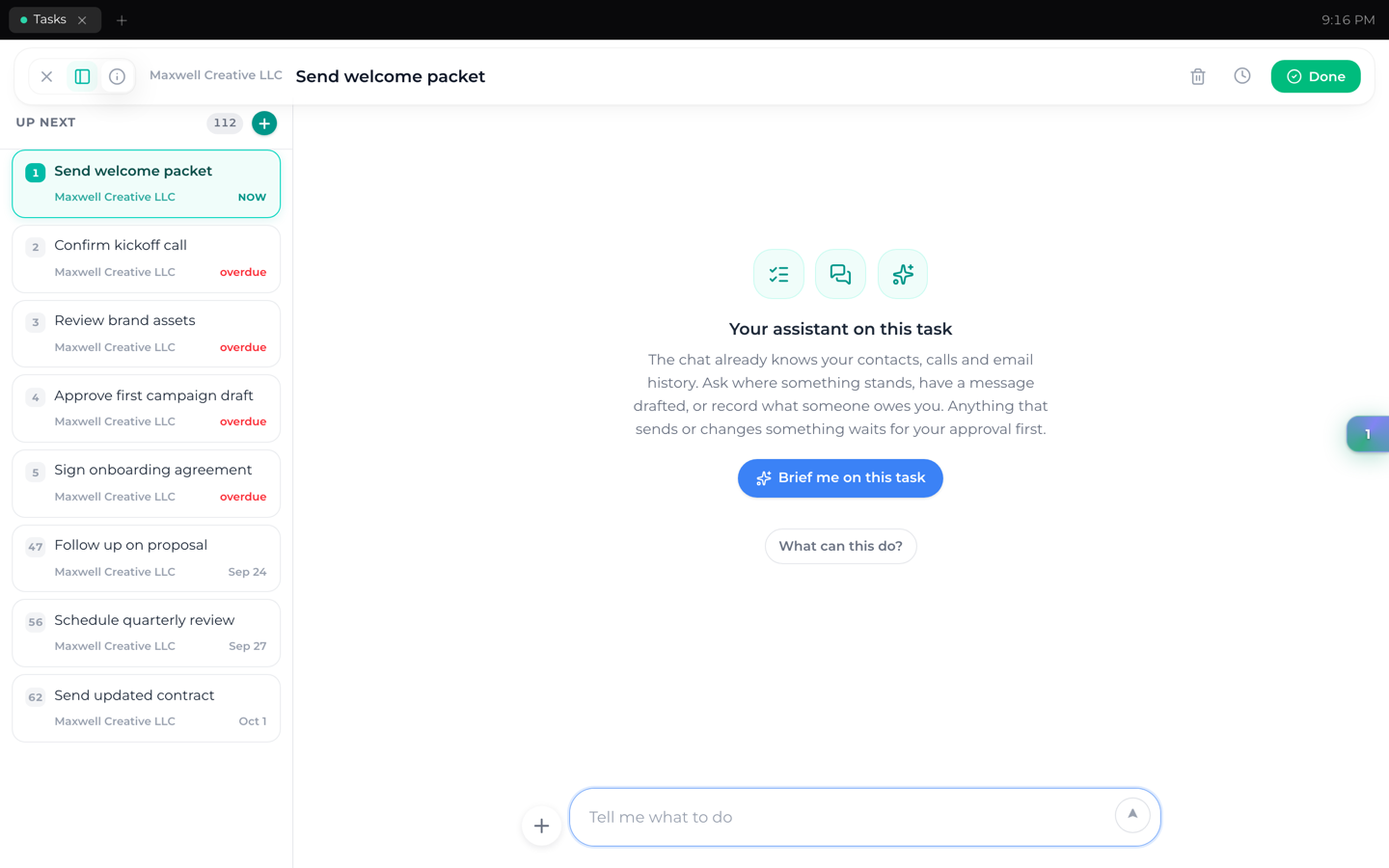
You said on Tuesday that you would send the survey. Nobody wrote it down. Wednesday morning it is on the list, with the line from the transcript underneath it and a draft ready to go, waiting on you.
Your own database. Not a row in somebody else’s.
Isolation at the credential level, on SOC 2 Type II certified infrastructure, with encryption at rest and in transit. Google and Microsoft own the login, so we never hold a password.
Your own database, not a row in ours
Your own domain and your own number
You connect it, you can revoke it
Your data is yours
Emerson runs on SOC 2 Type II certified infrastructure, and our own certification is underway: policies, access reviews and audit logging are being put in place now, with the external assessment next. If a completed report is a hard gate for you this quarter, ask on the call and we will tell you exactly where we are.
Before you change how your firm works.
What does it actually replace?
Emerson brings client records, meeting capture, e-signatures, campaigns, tasks and shared documents into one workflow. We review your current tools with you to decide what can be replaced and what should stay.
How long until it is running?
Standard setup takes two business days after we confirm the scope and receive the access and files we need. Larger migrations and custom work get an agreed schedule.
Is it per seat?
No. $1,000 a month for the firm, everyone included. Give your partners, assistants and team access without a seat fee. Only connected mailboxes beyond the included allowance add to the subscription.
Can we get our data out?
Yes, whenever you ask, as a full export in a format you can actually open. Your data is yours. Emerson itself stays ours, so what you would take is the record, not the software.
Do I have to move off the tools I like?
No. Your mail stays where it is, Gmail or Outlook. Emerson reads and writes through your own account rather than replacing it.
A 15-minute look at your workflow. Standard setup in two business days after scope and access are confirmed. Anything else, email hello@emersonnorth.com.